The Roman Catholic Liturgical Calendar for 2026: A 12 months of Religion and Feast
 The Roman Catholic Church, steeped in custom and guided by the rhythms of the liturgical 12 months, marks time by means of a calendar that’s each historical and ever-present. This calendar, greater than only a chronological document of days, is a roadmap of religion, a cyclical journey by means of the lifetime of Christ and the commemoration of the saints who’ve exemplified His teachings. As we strategy the 12 months 2026, understanding the construction and significance of the liturgical calendar permits us to extra totally take part within the Church’s life, deepening our religious connection and fostering a richer understanding of our religion.
This text will delve into the important thing features of the Roman Catholic liturgical calendar for the 12 months 2026, exploring its construction, seasons, principal feasts, and the underlying theological ideas that form its design. We may even contemplate how the liturgical calendar influences day by day life, prayer, and the celebration of the sacraments.
Understanding the Construction: A Dance of Fastened and Movable Feasts
The Roman Catholic liturgical calendar is a posh tapestry woven from two major kinds of feasts: fastened and movable.
- Fastened Feasts: These happen on the identical date every year. Examples embody Christmas (December twenty fifth), the Solemnity of Mary, Mom of God (January 1st), and the Feast of St. Joseph (March nineteenth). These feasts are tied to particular historic or conventional dates.
- Movable Feasts: These feasts shift in date every year, decided by the date of Easter. Easter, crucial feast within the Christian calendar, is calculated primarily based on the lunar cycle. Particularly, Easter Sunday falls on the primary Sunday after the primary full moon that happens on or after the spring equinox (March twenty first). This calculation ensures that Easter maintains its connection to the Jewish Passover, throughout which Christ’s crucifixion and resurrection occurred. The date of Easter then dictates the dates of different movable feasts, akin to Ash Wednesday, Ascension Thursday, Pentecost, and the Feast of Christ the King.
The Liturgical Seasons of 2026: A Journey By way of Salvation Historical past
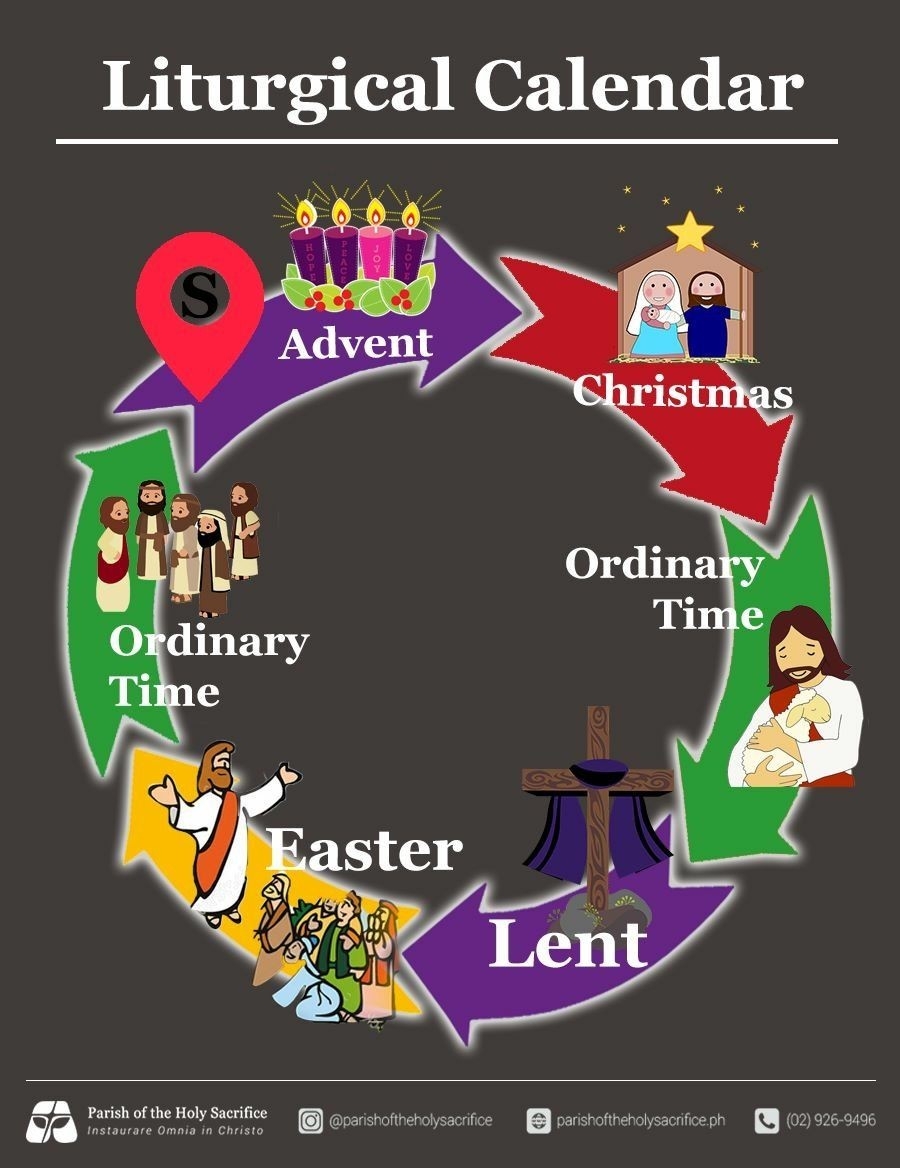
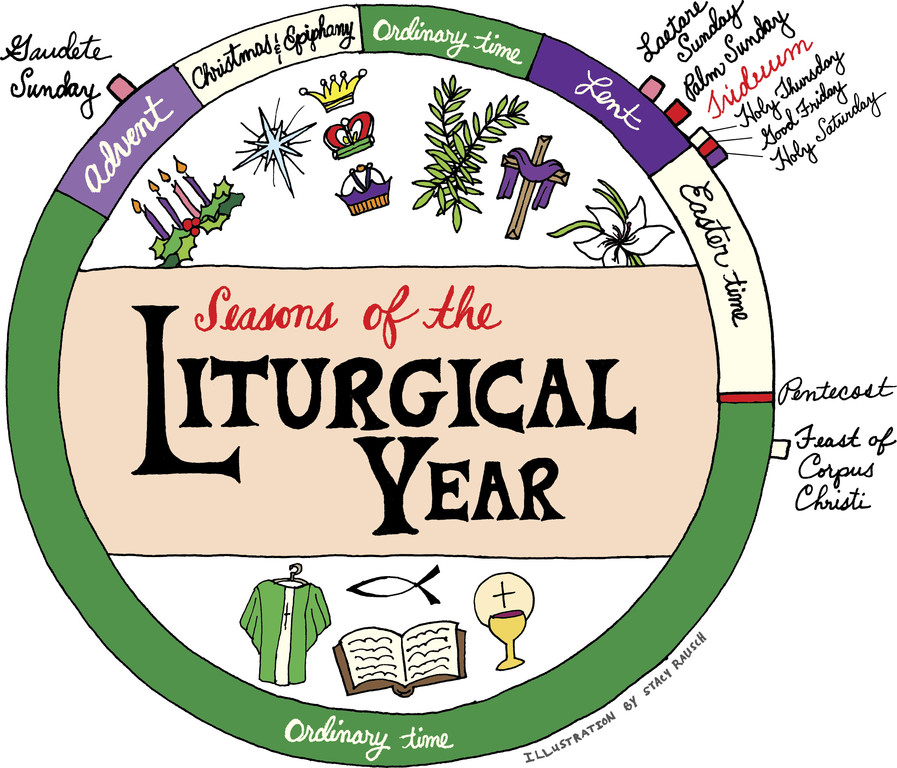
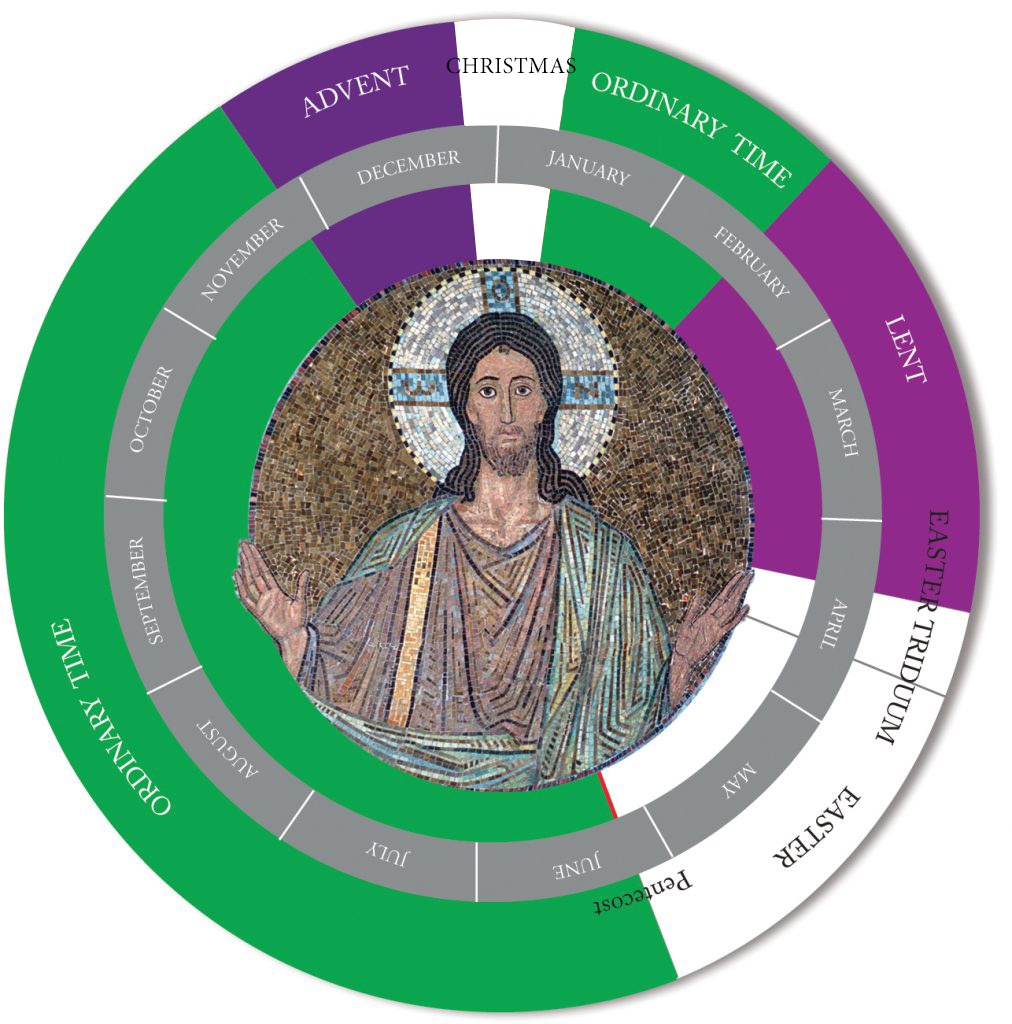
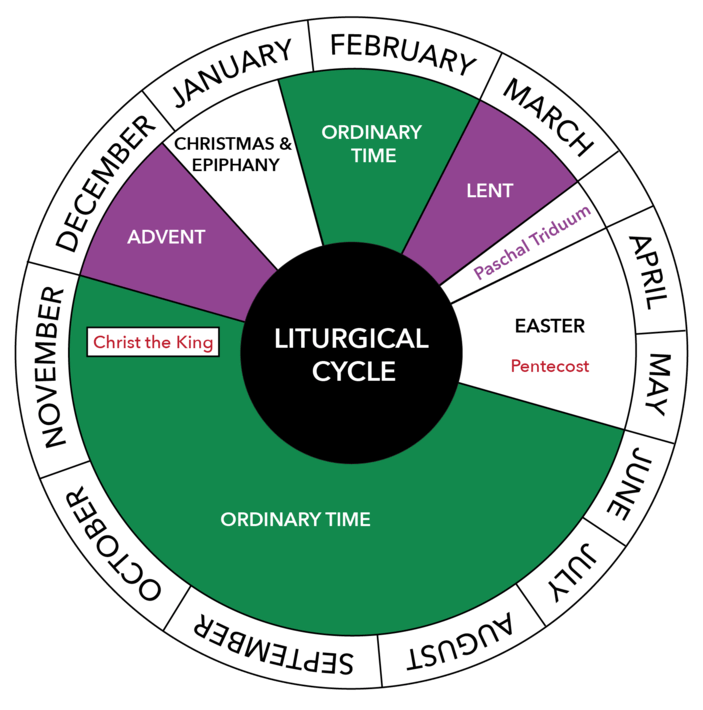
The liturgical 12 months is split into a number of distinct seasons, every with its personal theological focus, liturgical shade, and attribute prayers. These seasons present a framework for reflecting on completely different features of Christ’s life and the thriller of salvation. For 2026, we will anticipate the next approximate dates (topic to minor variations in numerous dioceses):
- Creation (Late November/Early December 2025 - December 24, 2025): A season of preparation and anticipation for the approaching of Christ. The liturgical shade is violet (purple), symbolizing penance and expectation. Creation focuses on three comings of Christ: his historic delivery in Bethlehem, his coming into our hearts, and his future coming in glory on the finish of time. The Creation wreath, with its 4 candles lit every week, is a distinguished image of this season. In 2026, Creation will conclude on Christmas Eve.
- Christmas Season (December 25, 2025 - January 11, 2026): A time of celebration of the Incarnation, the thriller of God turning into man. The liturgical shade is white or gold, symbolizing pleasure and purity. The Christmas season extends past Christmas Day, encompassing the Octave of Christmas (eight days of celebration) and culminating within the Feast of the Baptism of the Lord. Vital feasts inside the Christmas season embody the Feast of the Holy Household (the Sunday after Christmas), the Solemnity of Mary, Mom of God (January 1st), and the Epiphany (January sixth or the Sunday between January 2nd and eighth), which commemorates the go to of the Magi to the toddler Jesus.
- Odd Time (January 12, 2026 - February 17, 2026): The primary interval of Odd Time focuses on the general public ministry of Jesus, his teachings, miracles, and the institution of the Kingdom of God. The liturgical shade is inexperienced, symbolizing hope and development. Throughout this time, the readings at Mass observe a semi-continuous cycle, permitting for a broader publicity to the Scriptures.
- Lent (February 18, 2026 - April 4, 2026): A season of penance, prayer, and almsgiving, getting ready for the celebration of Easter. The liturgical shade is violet (purple). Lent begins on Ash Wednesday, with the imposition of ashes symbolizing mortality and the necessity for repentance. The forty days of Lent (excluding Sundays) recall the forty days Jesus spent within the desert, fasting and praying. Throughout Lent, Catholics are inspired to have interaction in practices of self-denial, prayer, and charitable works.
- Easter Triduum (April 1, 2026 - April 3, 2026): Probably the most sacred three days of the liturgical 12 months, commemorating the Ardour, Demise, and Resurrection of Jesus Christ. The Triduum begins with the Mass of the Lord’s Supper on Holy Thursday, continues with the Good Friday service commemorating the crucifixion, and culminates with the Easter Vigil on Holy Saturday night time. The liturgical colours range relying on the day, with violet on Holy Thursday (earlier than the Mass of the Lord’s Supper), pink on Good Friday, and white or gold on Holy Saturday and Easter Sunday.
- Easter Season (April 5, 2026 - Might 24, 2026): A time of rejoicing and celebration of the Resurrection of Jesus Christ. The liturgical shade is white or gold. The Easter season lasts for 50 days, culminating within the Feast of Pentecost, which commemorates the descent of the Holy Spirit upon the Apostles. Key feasts inside the Easter season embody the Ascension of the Lord (forty days after Easter) and Divine Mercy Sunday (the Sunday after Easter).
- Odd Time (Might 25, 2026 - Late November/Early December 2026): The second interval of Odd Time continues the deal with the general public ministry of Jesus and the continuing lifetime of the Church. The liturgical shade stays inexperienced. The final Sunday of Odd Time is the Solemnity of Christ the King, which affirms Christ’s common dominion and anticipates his return in glory.
Key Feasts and Solemnities in 2026: Remembering the Saints and Mysteries of Religion
Past the main seasons, the liturgical calendar is punctuated by quite a few feasts and solemnities that commemorate saints, occasions within the lifetime of Christ, and necessary theological mysteries. Whereas the particular rating and observance of those feasts could range barely in numerous dioceses and nations, among the most vital for 2026 will embody:
- Solemnity of Mary, Mom of God (January 1st): Celebrates Mary’s distinctive position in salvation historical past because the Mom of God.
- Epiphany of the Lord (January sixth or the Sunday between January 2nd and eighth): Commemorates the manifestation of Jesus to the Gentiles, represented by the Magi.
- Feast of the Baptism of the Lord (The Sunday after Epiphany): Marks the start of Jesus’ public ministry.
- Feast of St. Joseph, Partner of Mary (March nineteenth): Honors the foster father of Jesus and patron saint of employees.
- Annunciation of the Lord (March twenty fifth): Celebrates the angel Gabriel’s announcement to Mary that she would conceive and bear the Son of God.
- Good Friday (April 2, 2026): Commemorates the crucifixion of Jesus Christ.
- Easter Sunday (April 5, 2026): Celebrates the Resurrection of Jesus Christ.
- Divine Mercy Sunday (April 12, 2026): Celebrated on the Sunday after Easter, emphasizing God’s infinite mercy.
- Ascension of the Lord (Might 14, 2026): Commemorates Jesus’ ascension into heaven.
- Pentecost Sunday (Might 24, 2026): Celebrates the descent of the Holy Spirit upon the Apostles.
- Trinity Sunday (Might 31, 2026): Celebrates the thriller of the Holy Trinity: Father, Son, and Holy Spirit.
- Corpus Christi (June 7, 2026): Celebrates the Actual Presence of Christ within the Eucharist.
- Sacred Coronary heart of Jesus (June 19, 2026): Celebrates the love and compassion of Jesus Christ.
- Nativity of St. John the Baptist (June twenty fourth): Celebrates the delivery of John the Baptist, the forerunner of Jesus.
- Feast of Saints Peter and Paul, Apostles (June twenty ninth): Honors the 2 nice pillars of the early Church.
- Assumption of Mary (August fifteenth): Celebrates Mary’s bodily assumption into heaven.
- All Saints’ Day (November 1st): Celebrates all of the saints, identified and unknown.
- All Souls’ Day (November 2nd): A day of prayer for the souls of the devoted departed.
- Christ the King (November 22, 2026): Celebrates Christ’s common dominion.
- Immaculate Conception of Mary (December eighth): Celebrates Mary’s conception with out unique sin.
- Christmas (December twenty fifth): Celebrates the delivery of Jesus Christ.
- Holy Household (December 27, 2026): Celebrates the Holy Household of Jesus, Mary, and Joseph.
Theological Significance: A Tapestry of Salvation
The liturgical calendar isn’t merely a set of dates and occasions; it’s a rigorously structured framework designed to information believers by means of the important thing occasions of salvation historical past and to deepen their understanding of the mysteries of religion. Every season and feast has its personal theological significance, contributing to a holistic understanding of God’s plan for humanity.
- Creation reminds us of our want for redemption and our hope for Christ’s return.
- Christmas celebrates the Incarnation, the central thriller of our religion, and the love of God manifested within the delivery of Jesus.
- Lent calls us to repentance and conversion, getting ready us to have fun the Paschal Thriller.
- Easter proclaims the triumph of Christ over sin and demise, providing us the promise of everlasting life.
- Odd Time permits us to mirror on the teachings and miracles of Jesus, and to use them to our day by day lives.
- The feasts of the saints present us with examples of holiness and encourage us to observe of their footsteps.
- The solemnities have fun key theological mysteries, deepening our understanding of God’s plan for salvation.
Dwelling the Liturgical 12 months: Integrating Religion into Each day Life
The liturgical calendar isn’t meant to be noticed passively; reasonably, it’s meant to be actively built-in into our day by day lives. There are various methods to do that:
- Attending Mass frequently: The Mass is the central act of worship within the Catholic Church, and it’s throughout Mass that we most totally take part within the liturgical 12 months.
- Praying the Liturgy of the Hours: Also called the Divine Workplace, it is a cycle of prayers recited all through the day, aligning our private prayer with the Church’s liturgical prayer.
- Reflecting on the day by day Scripture readings: The readings at Mass are rigorously chosen to mirror the themes of the liturgical season, and reflecting on them can deepen our understanding of the Phrase of God.
- Observing the liturgical colours: Taking note of the liturgical colours utilized in church will help us to attach with the spirit of the season.
- Celebrating feast days: Marking feast days with particular meals, prayers, or actions will help us to recollect the saints and the occasions they commemorate.
- Participating in acts of penance throughout Lent: Fasting, prayer, and almsgiving are conventional Lenten practices that may assist us to develop nearer to God.
- Adorning our properties with liturgical symbols: Utilizing symbols such because the Creation wreath, the Christmas tree, or Easter eggs will help us to carry the liturgical 12 months into our properties.
- Taking part in parish actions: Many parishes supply particular packages and actions associated to the liturgical 12 months, akin to Creation retreats, Lenten missions, and Easter egg hunts.
Conclusion: A Journey of Religion in 2026
The Roman Catholic liturgical calendar for 2026 affords a wealthy and significant framework for dwelling our religion. By understanding its construction, seasons, and feasts, and by actively integrating it into our day by day lives, we will deepen our religious reference to Christ and the Church. As we journey by means of the 12 months, allow us to embrace the alternatives for prayer, reflection, and repair that the liturgical calendar gives, permitting it to form our lives and draw us nearer to God. The liturgical 12 months is a journey, not a vacation spot, a steady cycle of remembrance, celebration, and renewal that invitations us to develop in religion, hope, and love. In 2026, could all of us embrace this journey with open hearts and minds, permitting the rhythm of the liturgical 12 months to information us nearer to Christ.