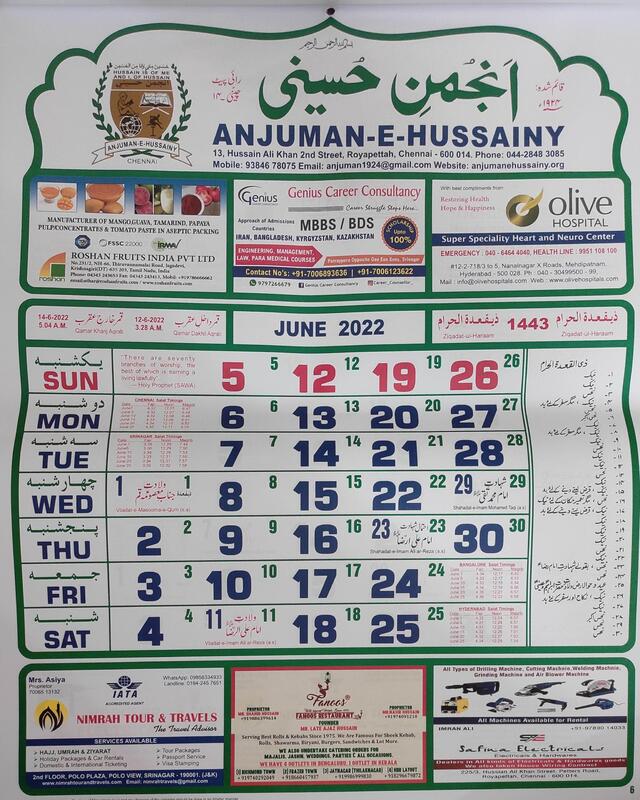
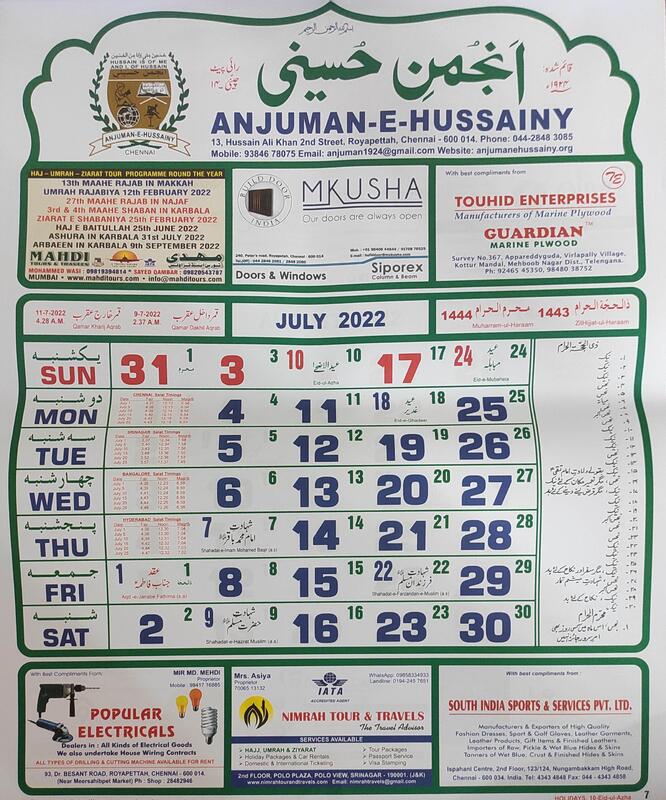
Anjuman-e-Hussaini Calendar 2026: A Beacon of Religion, Custom, and Neighborhood
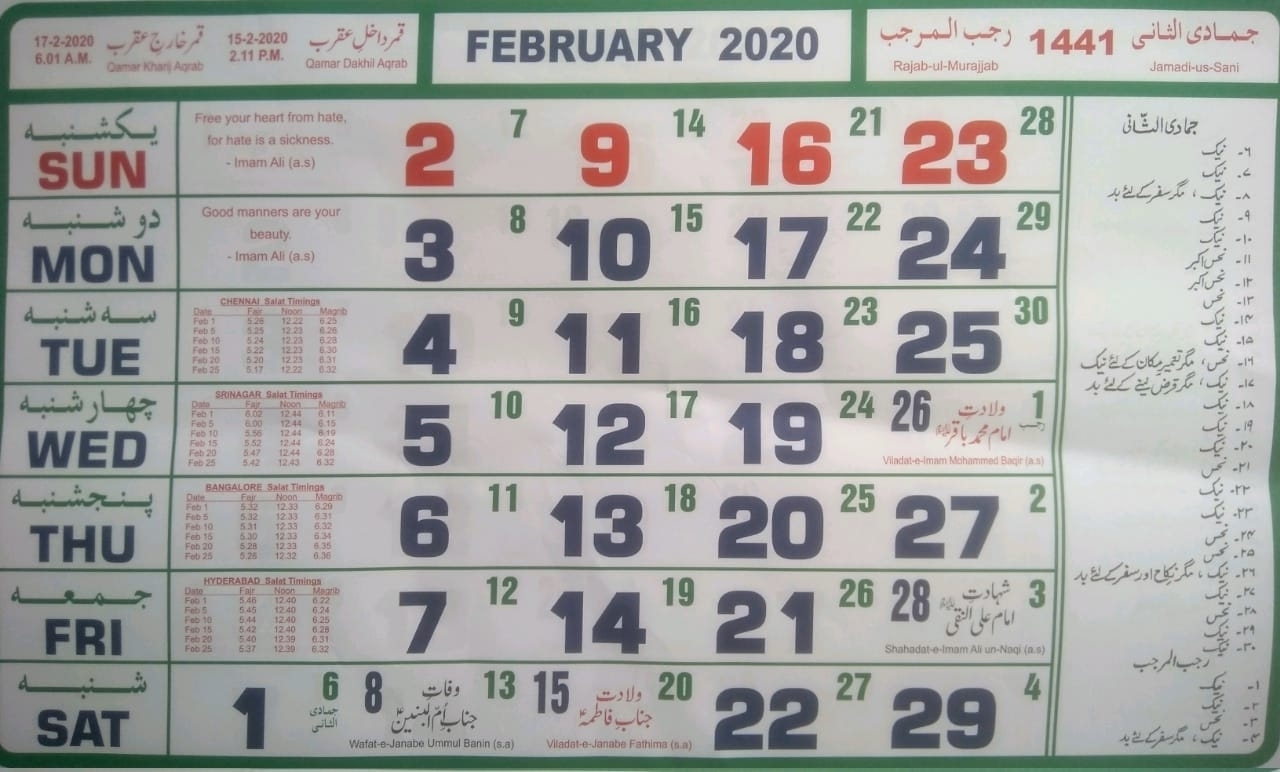
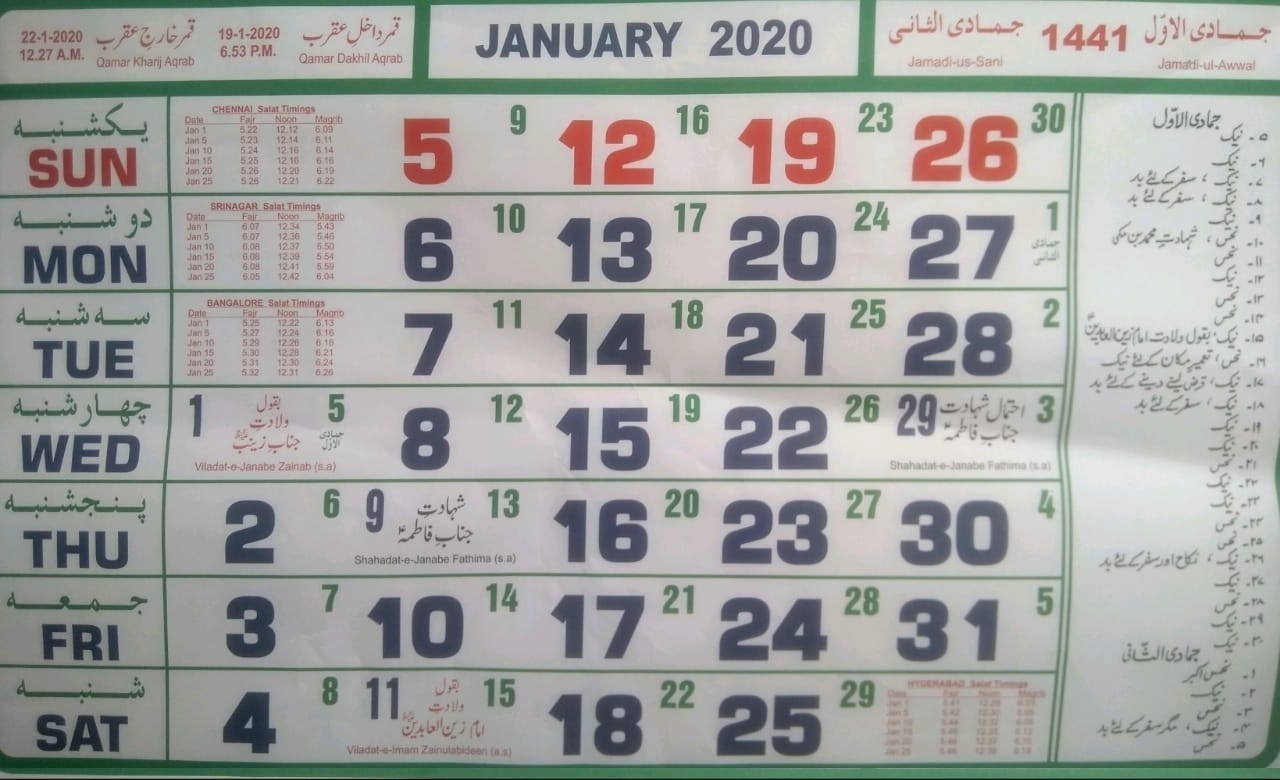
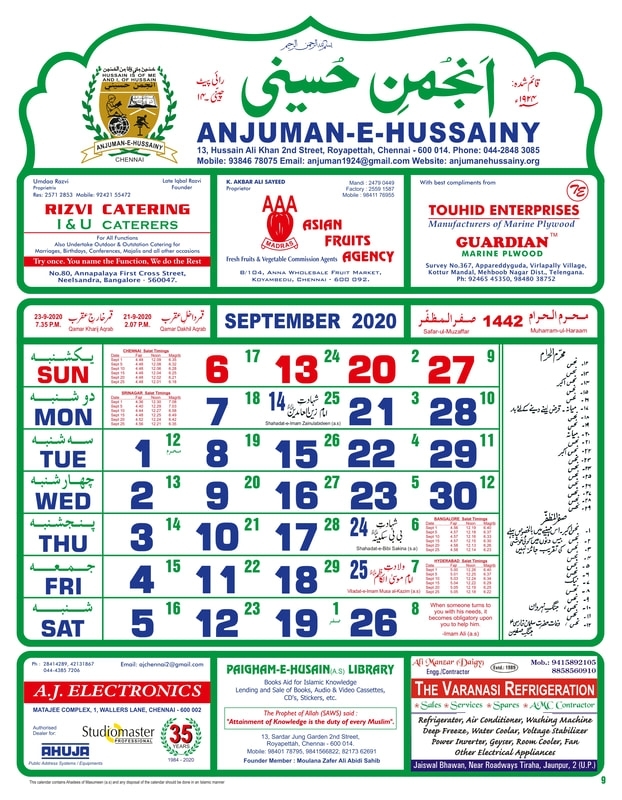
 The Anjuman-e-Hussaini calendar, a cornerstone of Shia Muslim life, serves as greater than only a timekeeping instrument. It’s a meticulously crafted information that intertwines religion, custom, and group, offering a complete framework for observing Islamic rituals, commemorating important historic occasions, and fostering a deeper reference to the teachings of Imam Hussain (a.s.) and the Ahlul Bayt (a.s.). As we strategy 2026, anticipation builds for the discharge of the Anjuman-e-Hussaini calendar, promising one other 12 months of religious steerage and communal unity. This text delves into the importance of this calendar, exploring its historic roots, its meticulous building, the important info it accommodates, and the profound affect it has on the lives of Shia Muslims worldwide.
Historic Roots and Evolution:
The custom of making calendars tailor-made to the particular wants of the Shia group has deep historic roots. Whereas the precise origins are tough to pinpoint, the necessity for correct lunar calculations to find out the start and finish of Islamic months, significantly for necessary occasions like Muharram and Ramadan, has all the time been paramount. Early Shia students and astronomers devoted themselves to growing exact strategies for lunar commentary and calculation.
Over time, these calculations have been formalized and included into calendars that went past mere date conserving. They included particulars about important Islamic dates, the instances for day by day prayers, and different related info. Organizations like Anjuman-e-Hussaini, devoted to preserving and selling Shia Islamic traditions, took on the accountability of manufacturing and distributing these calendars.
The evolution of the Anjuman-e-Hussaini calendar displays the altering wants and technological developments of the group. Early variations have been possible handwritten or printed utilizing rudimentary strategies. As printing know-how improved, the calendars turned extra elaborate, incorporating detailed illustrations, historic narratives, and insightful commentary.
Within the fashionable period, the Anjuman-e-Hussaini calendar has embraced digital know-how. Many organizations now provide on-line variations of the calendar, accessible through web sites and cell apps. This permits for better accessibility and comfort, guaranteeing that Shia Muslims worldwide can keep knowledgeable about necessary Islamic dates and occasions, no matter their location.
The Meticulous Building of the Calendar:
Creating the Anjuman-e-Hussaini calendar is a meticulous and sophisticated course of that requires experience in numerous fields, together with Islamic jurisprudence, astronomy, and historic analysis. The method usually includes the next steps:
-
Lunar Calculations: The muse of the calendar is the correct calculation of the lunar cycle. This includes monitoring the motion of the moon and predicting the visibility of the brand new moon, which marks the start of every Islamic month. Professional astronomers and students collaborate to make sure the precision of those calculations. Totally different methodologies exist, with some counting on sighting the brand new moon with the bare eye (ru’yat al-hilal) and others utilizing astronomical calculations (hisab). The Anjuman-e-Hussaini calendar usually adheres to a selected college of thought or methodology in its lunar calculations, which is normally clearly said within the calendar itself.
-
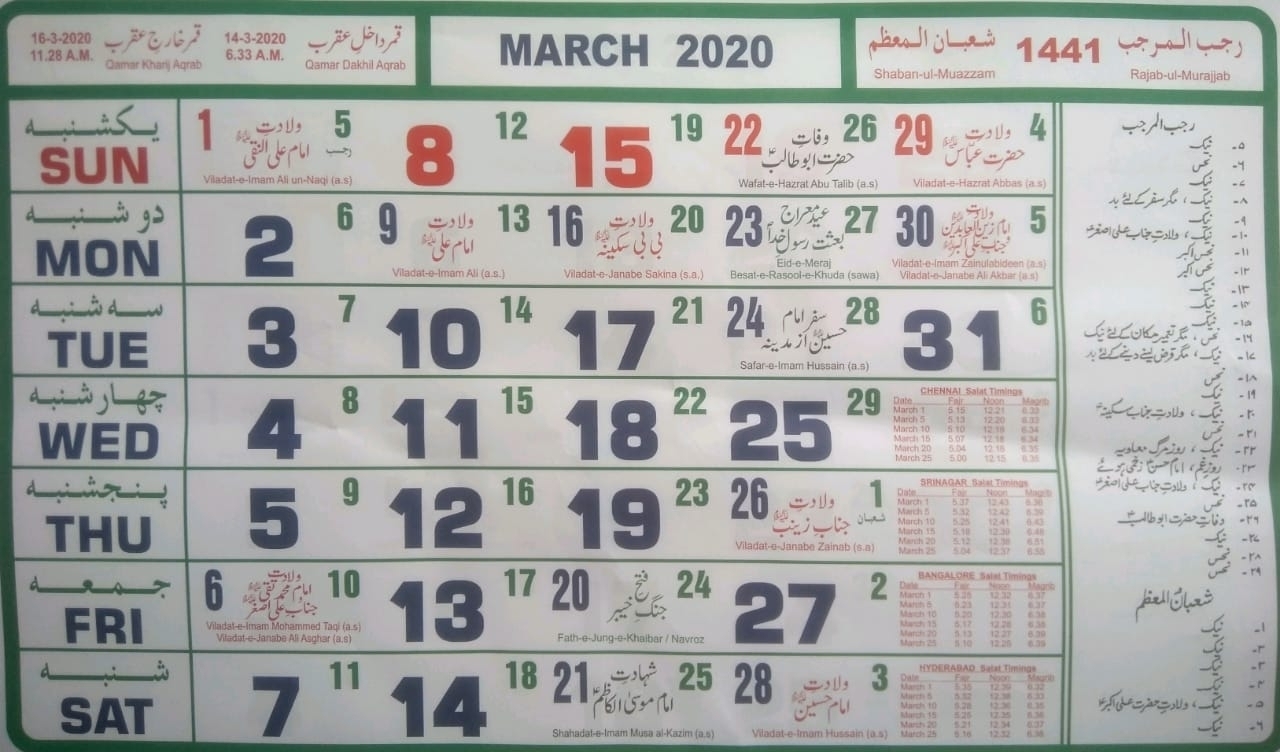
Willpower of Islamic Dates: Based mostly on the lunar calculations, the dates of necessary Islamic occasions are decided. These embody:
- Muharram: The primary month of the Islamic calendar, marked by mourning and remembrance of the martyrdom of Imam Hussain (a.s.) and his companions within the Battle of Karbala.
- Safar: The second month of the Islamic calendar, which incorporates the Arbaeen, commemorating the fortieth day after the martyrdom of Imam Hussain (a.s.).
- Rabi’ al-Awwal: The third month of the Islamic calendar, which incorporates the delivery anniversary of the Prophet Muhammad (peace be upon him and his progeny).
- Rabi’ al-Thani: The fourth month of the Islamic calendar.
- Jumada al-Awwal: The fifth month of the Islamic calendar.
- Jumada al-Thani: The sixth month of the Islamic calendar.
- Rajab: The seventh month of the Islamic calendar, thought of a sacred month. It consists of the delivery anniversary of Imam Ali (a.s.).
- Sha’ban: The eighth month of the Islamic calendar, which incorporates the delivery anniversary of Imam Mahdi (a.s.), the awaited savior.
- Ramadan: The ninth month of the Islamic calendar, a month of fasting, prayer, and religious reflection.
- Shawwal: The tenth month of the Islamic calendar, which incorporates Eid al-Fitr, the celebration marking the top of Ramadan.
- Dhu al-Qa’dah: The eleventh month of the Islamic calendar.
- Dhu al-Hijjah: The twelfth month of the Islamic calendar, which incorporates Hajj, the pilgrimage to Mecca, and Eid al-Adha, the pageant of sacrifice.
-
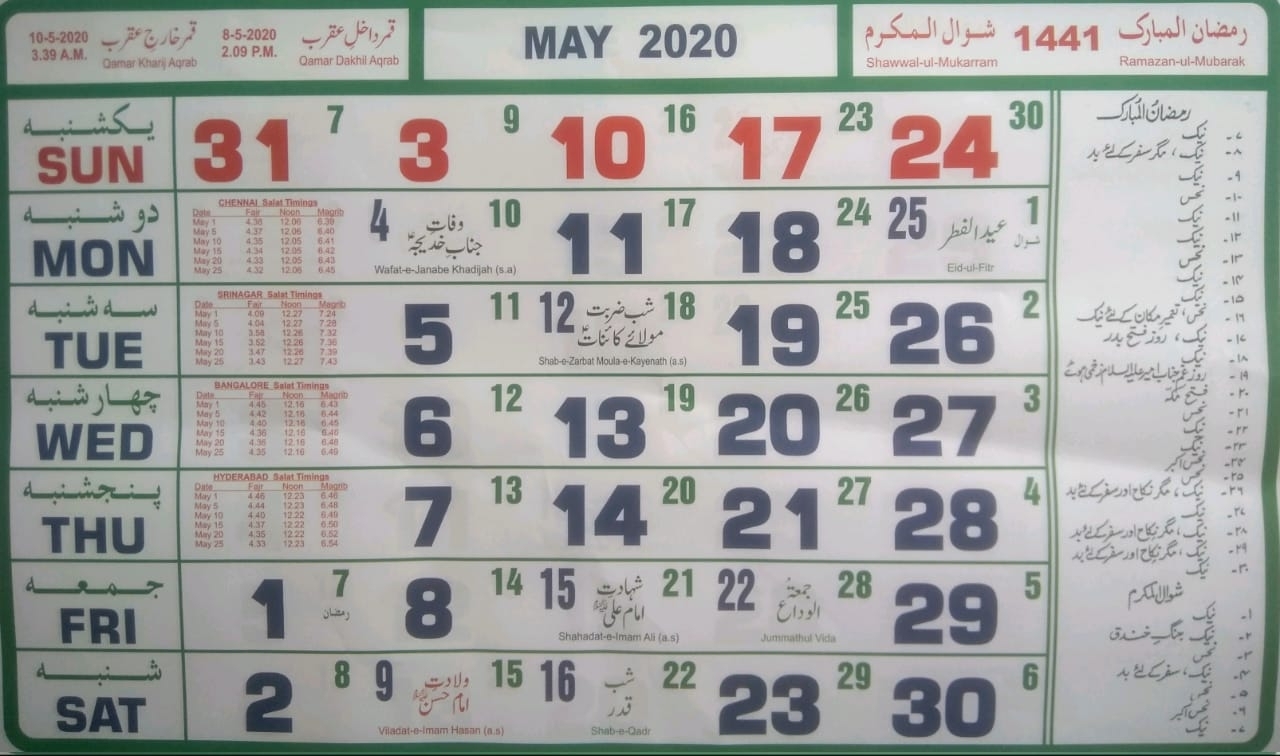
Prayer Instances: The calendar gives correct prayer instances for every day, primarily based on the geographical location for which it’s designed. These prayer instances are usually calculated utilizing particular formulation that bear in mind the place of the solar and the native latitude and longitude.
-
Historic Analysis: The calendar typically consists of historic narratives and details about important occasions in Islamic historical past, significantly these associated to the Ahlul Bayt (a.s.). This requires cautious analysis and verification of historic sources.
-
Evaluation and Approval: As soon as the calendar is compiled, it’s reviewed and accepted by spiritual students and authorities to make sure its accuracy and adherence to Islamic ideas.
Important Data Contained within the Calendar:
The Anjuman-e-Hussaini calendar is a treasure trove of knowledge, offering a complete information to Shia Islamic life. Along with the dates of necessary Islamic occasions and prayer instances, the calendar usually consists of:
- A’maal (Advisable Deeds): For important Islamic dates, the calendar typically lists beneficial prayers, supplications (duas), and different acts of worship (a’maal) which might be thought of significantly meritorious. These A’maal are sometimes drawn from genuine Islamic sources and supply steerage for observing these occasions in a spiritually significant method.
- Ziyarat (Pilgrimage): The calendar might embody texts of Ziyarat, that are prayers of visitation to the tombs of the Prophet Muhammad (peace be upon him and his progeny) and the Imams (a.s.). Reciting Ziyarat is taken into account a extremely rewarding act of devotion.
- Ahkam (Rulings): The calendar might embody concise explanations of Islamic rulings (Ahkam) associated to varied points of day by day life, similar to prayer, fasting, and Zakat (charity).
- Historic Narratives: The calendar typically options historic narratives in regards to the lives and teachings of the Prophet Muhammad (peace be upon him and his progeny) and the Ahlul Bayt (a.s.). These narratives serve to teach and encourage readers, fostering a deeper understanding of Islamic historical past and ideas.
- Ethical and Moral Teachings: The calendar might embody excerpts from the Quran and Hadith (sayings of the Prophet Muhammad, peace be upon him and his progeny) that emphasize ethical and moral values, similar to honesty, compassion, and justice.
- Neighborhood Bulletins: The calendar can also embody bulletins about group occasions, similar to lectures, seminars, and non secular gatherings.
The Profound Influence on the Lives of Shia Muslims:
The Anjuman-e-Hussaini calendar performs a profound function in shaping the lives of Shia Muslims, fostering a deeper reference to their religion, traditions, and group. Its affect might be seen in a number of methods:
- Religious Steerage: The calendar gives a framework for observing Islamic rituals and commemorations in a significant method, serving to people to attach with their religion on a deeper degree. The inclusion of A’maal and Ziyarat encourages acts of devotion and religious reflection.
- Communal Unity: The calendar serves as a unifying drive, bringing Shia Muslims collectively in shared observances and commemorations. By following the identical calendar, members of the group can take part in spiritual occasions concurrently, no matter their geographical location.
- Preservation of Custom: The calendar helps to protect and transmit Shia Islamic traditions from one era to the following. By together with historic narratives and non secular teachings, the calendar ensures that these traditions are stored alive and handed on to future generations.
- Academic Useful resource: The calendar serves as an academic useful resource, offering details about Islamic historical past, rulings, and ethical teachings. This helps to extend consciousness and understanding of Islamic ideas and values.
- Time Administration: The calendar gives a sensible instrument for managing time and planning actions round spiritual observances. This helps people to prioritize their religion and combine it into their day by day lives.
The Anjuman-e-Hussaini Calendar 2026: A Glimpse into the Future:
As we stay up for the discharge of the Anjuman-e-Hussaini calendar for 2026, we will anticipate a continuation of its important function within the Shia group. We will anticipate:
- Correct Lunar Calculations: The calendar will undoubtedly present correct lunar calculations, guaranteeing that necessary Islamic dates are decided with precision.
- Complete Data: The calendar will possible embody a wealth of details about Islamic occasions, prayer instances, A’maal, Ziyarat, and historic narratives.
- Trendy Accessibility: The calendar will possible be out there in each print and digital codecs, guaranteeing that it’s accessible to Shia Muslims worldwide.
- Neighborhood Engagement: The calendar might embody options that promote group engagement, similar to bulletins about native occasions and alternatives for charitable giving.
In conclusion, the Anjuman-e-Hussaini calendar is greater than only a calendar; it’s a important useful resource that gives religious steerage, fosters communal unity, preserves custom, and promotes schooling. As we strategy 2026, the discharge of the Anjuman-e-Hussaini calendar will undoubtedly be eagerly awaited by Shia Muslims all over the world, providing a beacon of religion, custom, and group for one more 12 months. It’s a testomony to the enduring legacy of Imam Hussain (a.s.) and the Ahlul Bayt (a.s.), and a reminder of the significance of preserving and selling their teachings for generations to come back.